Faqs Page
Here you will find answers to frequently asked questions about the tram project.
THE TRAM PROJECT AND ROUTE
CONSTRUCTION SITES, REDEVELOPMENT AND IMPACTS ON THE CITY
TECHNICAL ASPECTS
THE TRAM PROJECT AND ROUTE
The new Fiera - Pendolina tram line will cross the main neighbourhoods not served by the underground. Along its route, it will intersect with the underground at the San Faustino and Stazione FS stations, facilitating transfers and therefore travel.
The Fiera - Pendolina line will have 22 stops, located to serve the main neighbourhoods, points of interest and transport hubs in the city.
Each tram will be able to carry up to 220 passengers, offering a comfortable and efficient service.
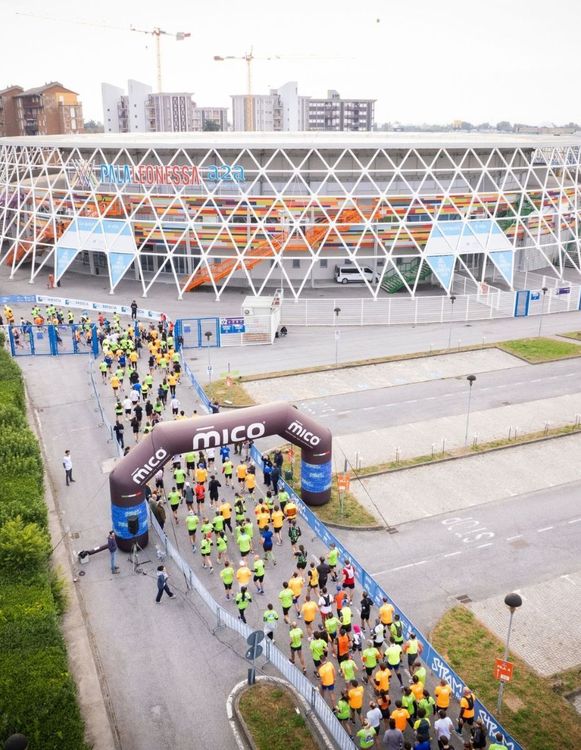
The Fiera – Pendolina line has been designed to connect the city's main attractions, facilitating travel to the most popular and strategic locations such as the Iveco Industrial Park, located along Via Volturno, which is one of Brescia's most important production areas, and the historic center, which is the beating heart of the city, rich in commercial and cultural activities. The tramway will run above ground through the historic center, intersecting with the subway at the San Faustino and Stazione FS stations. The railway station is one of the main railway stations in Lombardy in terms of passenger numbers, with an average annual flow of between 18 and 22 million travelers, equal to 50,000/60,000 passengers per day and corresponding to 10% of the regional total. Trains, the metro, and buses all meet here, and the tram line will further facilitate connections between the various transport systems. The Fiera - Pendolina line will also serve the ASST degli Spedali Civili di Brescia hospital in Via Corsica and the Palazzo della Regione - two major centers, one healthcare and one institutional, which will be easily accessible thanks to the tram - and Brixia Forum and PalaLeonessa, two modern and renovated facilities that host events, fairs, conferences, concerts, and sporting competitions that attract thousands of visitors every year.
The estimated travel time for the main sections of the tram line will be: from Pendolina to the centre: about 20 minutes; from the centre to Fiera: about 18 minutes; from Fiera to the railway station: about 15 minutes.
The total cost of the project amounts to approximately €426.4 million.
The Ministry of Infrastructures and Transport has financed most of the amount, with €359.5 million allocated in 2021 and a further €63.1 million in 2023.
The Municipality of Brescia will contribute with €3.7 million.
Yes, there are plans to build the T3 line, which will connect Badia / Violino to Sant’Eufemia / Mille Miglia, extending east-west transport coverage of the city.
The T3 line, with a total length of 11.91 km, will use the 4.35 km Colombo-Solferino section, shared with the Fiera - Pendolina project, and will see the construction of two new branches of 7.56 km: one to the west, to serve the districts of Sant’Anna, Violino and Badia, reaching the current last stop of bus line 3 Mandolossa; one to the east, serving the Solferino – Diaz – Duca d’Aosta – Piave – Bornata route, reaching the entrance to the Sant’Eufemia neighbourhood.
Both end of lines will be equipped with a car park with 100 spaces each.
Over 70% of the route will be on dedicated lanes and will include 23 stops.
This second project has been presented by the Ministry of Infrastructures and Transport on 30 May 2025.
CONSTRUCTION SITES, REDEVELOPMENT AND IMPACTS ON THE CITY
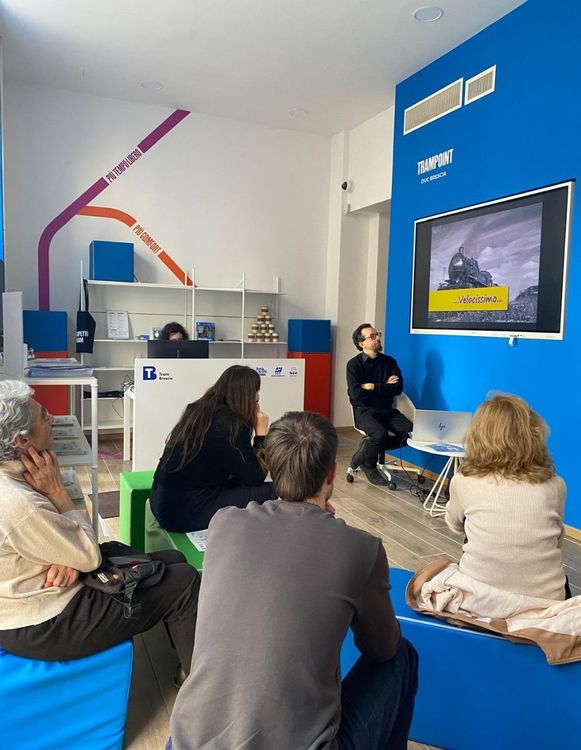
During the construction work, the City of Brescia and the Brescia Mobilità Group will organize informational meetings in the neighborhoods, and a TramPoint is already in place at Corso Palestro 38/A*. These initiatives will allow residents to stay informed, actively participate in the change, and build a meaningful connection with the new service.
You can follow all updates on the Tram Project online through the official channels: on Instagram and Facebook @ioaspetto.iltram; on LinkedIn @Tram Brescia.
A dedicated number, 344 0360936 (phone and WhatsApp), is also available; residents can text or call this number for questions and clarifications about the future tram. For information on construction work and job sites, you can also email customercare.tram@bresciamobilita.it.
To receive information on tram construction, visit the Tourism and Mobility Infopoint at Via Trieste 1 (Monday–Friday: 9:00 a.m.–7:00 p.m. and Saturday–Sunday: 9:00 a.m.–5:00 p.m.).
WhatsApp broadcast groups organized by area will also be set up to provide timely and accurate information.
*The TramPoint is temporarily closed.
Tourism and Mobility Info Points offer assistance with all transport services (tickets, season tickets, bike sharing, parking) and tourist information on events, museums and attractions in the city.
TramPoint, instead, is dedicated exclusively to the new tram: not only does it provide information on routes, stops and works, but it is also a space for dialogue and listening, designed to accompany citizens towards the launch of the new service.
The first TramPoint was opened on 22 September 2025 at Corso Palestro 38/A, in the centre of Brescia, and offers assistance, information and listening to citizens about the future service.
The construction sites have been designed to limit their impact on city life and economic and commercial activities as much as possible. In almost all cases, access to shops, offices and homes will always be guaranteed, both for vehicles and pedestrians, so as to maintain the continuity of daily activities in every neighbourhood. Each phase will be managed in collaboration with the parties involved, thanks to constant dialogue, and in the event of temporary interference, direct consultation with the businesses involved will be initiated.
Yes, the tram construction works will also provide an opportunity to redevelop several urban areas: the project involves the creation of over 20,000 m² of new public spaces, with more green areas, new pedestrian and cycle paths, and measures to make the city more liveable, sustainable and people-friendly.
Yes, with the complete renovation of the roads concerned, the project includes both the maintenance (where already present) and the construction of new cycle paths on most of the roads affected by the tram route, in continuity and integration with the rest of the city’s cycle network.
Yes, two new park and rides will be built near the tram last stops at the Fiera and Pendolina depots.
TECHNICAL ASPECTS
The detailed design and construction of the tram line were entrusted to a joint venture: Manelli Impresa S.p.A., Alstom and Hitachi Rail.
The lead contractor, Manelli Impresa S.p.A., will be responsible for the construction of infrastructure, track and civil works; Alstom will be responsible for the design and construction of the equipment, electric traction, overhead contact line, ground signalling system, public lighting and traffic light system; while the 18 trains will be manufactured by Hitachi Rail at their site in Reggio Calabria, the same site where the trains for the Brescia automatic metro system were manufactured.
The trams will be modern, silent and accessible. They will be constructed using lightweight materials that are 98% recyclable and equipped with automatic air conditioning that will adjust to the number of passengers, reducing energy consumption.
In the city centre areas, they will be battery-powered and wireless, reducing the visual impact of the infrastructure.
Braking energy recovery and innovative algorithms will also enable energy savings of around 20%.
No, specific solutions are adopted in rail vehicles, both in terms of infrastructure (tracks and concrete slabs) and carriages, to minimise vibration and noise.
The new trams, manufactured by Hitachi Rail, will be designed and developed according to S.C.A.I. principles (Safety, Comfort, Environment, Innovation) and the carriages will feature advanced technologies for vibration optimisation and noise reduction.
Project estimates indicate a possible reduction in noise of up to 15% and vibrations of up to 85% compared to an electric bus, contributing to a more liveable urban environment.
The tram will be powered by two complementary methods: electric contact and battery-powered. For most of the route, the tram will use traditional overhead power supply, which guarantees continuity and power throughout the journey. However, in areas that are more sensitive from an aesthetic or landscape point of view, such as the historic centre, a battery-powered system will be used.
Overhead power supply is more energy efficient than producing, recharging and using batteries to perform the same task: it avoids losses associated with the production, recharging and use of the batteries themselves.
For this reason, the tram only uses the battery in the most sensitive areas, such as the historic centre, where it is important to reduce the visual impact by eliminating overhead cables, while the rest of the route remains powered directly from the grid, which is more efficient.